Vitamin & mineral checkup: insight into your vitamin and mineral values
An extensive blood test with 10 vitamin and mineral values — vitamin D, vitamin B12, active B12, folate, magnesium, zinc and the full iron status — for insight into possible deficiencies.
Add to your order
No referral needed
Added to your order
Click the button to view your cart
Included values
11 valuesVitamin D (25-OH), Vitamin B12, Folate (Folic Acid), Magnesium, Zinc, Iron (Serum), Ferritin, Transferrin, Transferrin Saturation, Hemoglobin, MCV (Mean Corpuscular Volume)
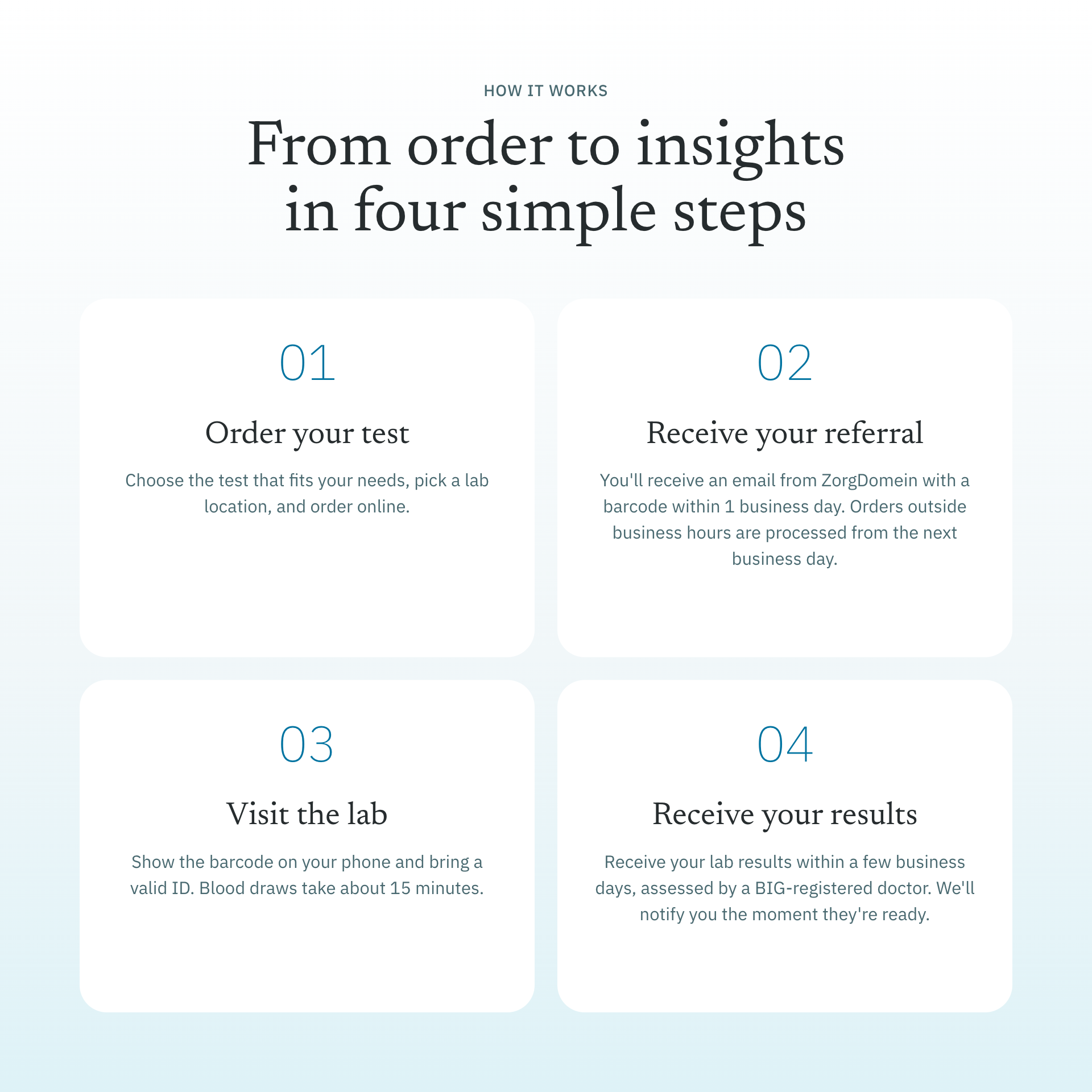
Your Health Journey in 4 Simple Steps
From order to insights, we've made health testing as easy as it should be.
Order Your Test
Choose the test that fits your needs, pick a lab location, and order online.
Receive Your Referral
You'll receive an email from ZorgDomein with a barcode within 1 business day. Orders outside business hours are processed from the next business day.
Visit the Lab
Show the barcode on your phone and bring a valid ID. Blood draws take about 15 minutes.
Receive Your Results
Receive your lab results within a few business days, assessed by a BIG-registered doctor. We'll notify you the moment they're ready.
Order Your Test
Choose the test that fits your needs, pick a lab location, and order online.
Receive Your Referral
You'll receive an email from ZorgDomein with a barcode within 1 business day. Orders outside business hours are processed from the next business day.
Visit the Lab
Show the barcode on your phone and bring a valid ID. Blood draws take about 15 minutes.
Receive Your Results
Receive your lab results within a few business days, assessed by a BIG-registered doctor. We'll notify you the moment they're ready.
Always a location near you
With 700+ certified phlebotomy points across the Netherlands.
What this checkup measures
This checkup includes 11 values for a clear picture of this system.
| No. | Biomarker | Unit | Turnaround |
|---|---|---|---|
| 01 | Vitamin D (25-OH) Vitamin D is a fat-soluble vitamin. Its main job is the absorption of calcium and phosphate from the gut. That makes it decisive for bone metabolism. The skin produces it under the influence of sunlight. Food and supplements supply a smaller share. | nmol/l | 3 days |
| 02 | Vitamin B12 Vitamin B12 is considered essential for red blood cell formation, neurological function, and DNA synthesis. Deficiency may develop gradually and is sometimes associated with dietary patterns. Healthcare providers can help interpret your results. | pmol/l | 3 days |
| 03 | Folate (Folic Acid) Folate, also known as vitamin B9, is a water-soluble vitamin involved in cell division and DNA synthesis. Adequate folate levels are considered important for overall health and may be particularly relevant during periods of rapid growth. | nmol/l | 2 days |
| 04 | Magnesium Magnesium is an essential mineral involved in over 300 enzymatic reactions in the body, including energy production, muscle and nerve function, blood sugar regulation, and bone development. | mmol/l | 5 days |
| 05 | Zinc Zinc is an essential trace mineral involved in immune function, wound healing, DNA synthesis, protein production, and cell division. It is required for the activity of over 300 enzymes. | umol/l | 6 days |
| 06 | Iron (Serum) Serum iron measures the amount of circulating iron in your blood. Iron is essential for haemoglobin production, oxygen transport, and energy metabolism throughout the body. | umol/l | 5 days |
| 07 | Ferritin Ferritin is a protein that stores iron, so your ferritin level shows how large your iron reserve is. Serum iron only measures how much iron is circulating in your blood at that moment; ferritin describes the reserve behind it. That reserve empties before your haemoglobin falls, so a low ferritin can already cause symptoms while your blood count still looks normal. Ferritin also rises with inflammation, infection and liver strain, which is why it can only be read properly alongside a CRP. Commonly used reference values are 30 to 400 µg/l for men and 15 to 150 µg/l for women, but your own laboratory report is what counts. | ug/l | 2 days |
| 08 | Transferrin Transferrin is the main protein responsible for transporting iron in the blood. It carries iron from the gut and storage sites to cells that need it, including bone marrow for red blood cell production. | g/l | 2 days |
| 09 | Transferrin Saturation Transferrin saturation measures the percentage of the iron-transport protein transferrin that is occupied by iron. It is a key indicator of your body's iron status and helps distinguish between different causes of iron-related disorders. | % | — |
| 10 | Hemoglobin A hemoglobin test measures the amount of hemoglobin protein in your blood. Hemoglobin is found inside red blood cells and is responsible for binding oxygen in the lungs and delivering it throughout your body. | mmol/l | 1 day |
| 11 | MCV (Mean Corpuscular Volume) MCV stands for mean corpuscular volume: the average volume of one red blood cell, expressed in femtolitres. In adults an MCV between 80 and 100 fL is normal. Below 80 fL your red cells are small, which usually points to iron deficiency or to an inherited trait. Above 100 fL they are large, which fits a vitamin B12 or folate deficiency, regular alcohol use, an underactive thyroid or liver disease. MCV makes no diagnosis of its own: it indicates the direction in which to look further. And because it is an average, the value can be normal while two deficiencies exist side by side. | fl | 1 day |
| Your result arrives once the slowest test is finished: 6 days. This is indicative; turnaround varies per laboratory. | |||
Preparation
-
Been ill? Wait a little
RequiredHad a fever, an infection or a vaccination in the past 2 weeks? Wait with the draw until you are fully recovered. These values react to inflammation and would give a distorted picture.
-
Preferably fasting
RecommendedComing fasting gives a slightly cleaner value, but it is not required. If it suits you, eat nothing from 22:00 the evening before and drink only water.
-
Preferably in the morning
RecommendedA morning draw makes this value easiest to compare with its reference range. Plan the draw before 10:00 if you can.
- Water is always fine. Drink as usual beforehand, it makes the draw easier.
- Take your usual medication, unless your own doctor told you otherwise.
Extend this panel
Tests from the same field, run on the same sample. Same draw, no second appointment.
Related checkups
Discover more checkups for a fuller picture of your health.
Liver checkup
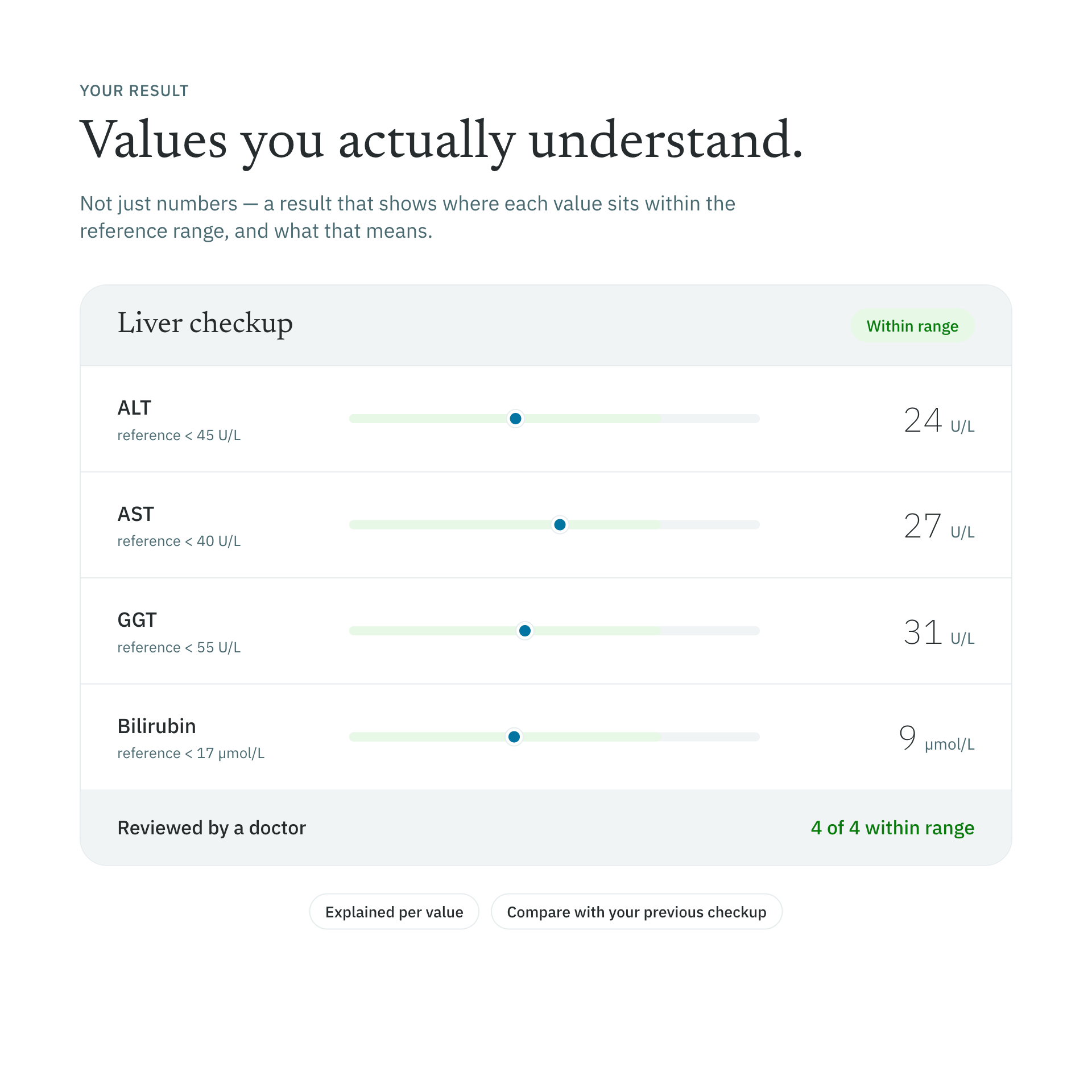
A blood test with 9 liver values — ALT, AST, GGT, alkaline phosphatase, bilirubin and albumin — for insight into how your liver is functioning.
Kidney checkup
A blood test with 5 kidney values — creatinine, eGFR, uric acid, sodium and potassium — for insight into how your kidneys are functioning.
Thyroid checkup
A blood test with 4 thyroid values — TSH, free T4, free T3 and anti-TPO — for insight into how your thyroid is functioning.
This test not quite right?
Build your own blood test from 51+ individual biomarkers — choose exactly what you need.
Have a question?
Our team is happy to help. Ask your question and we'll respond as soon as possible.